A layered approach
Give the room more than one kind of light
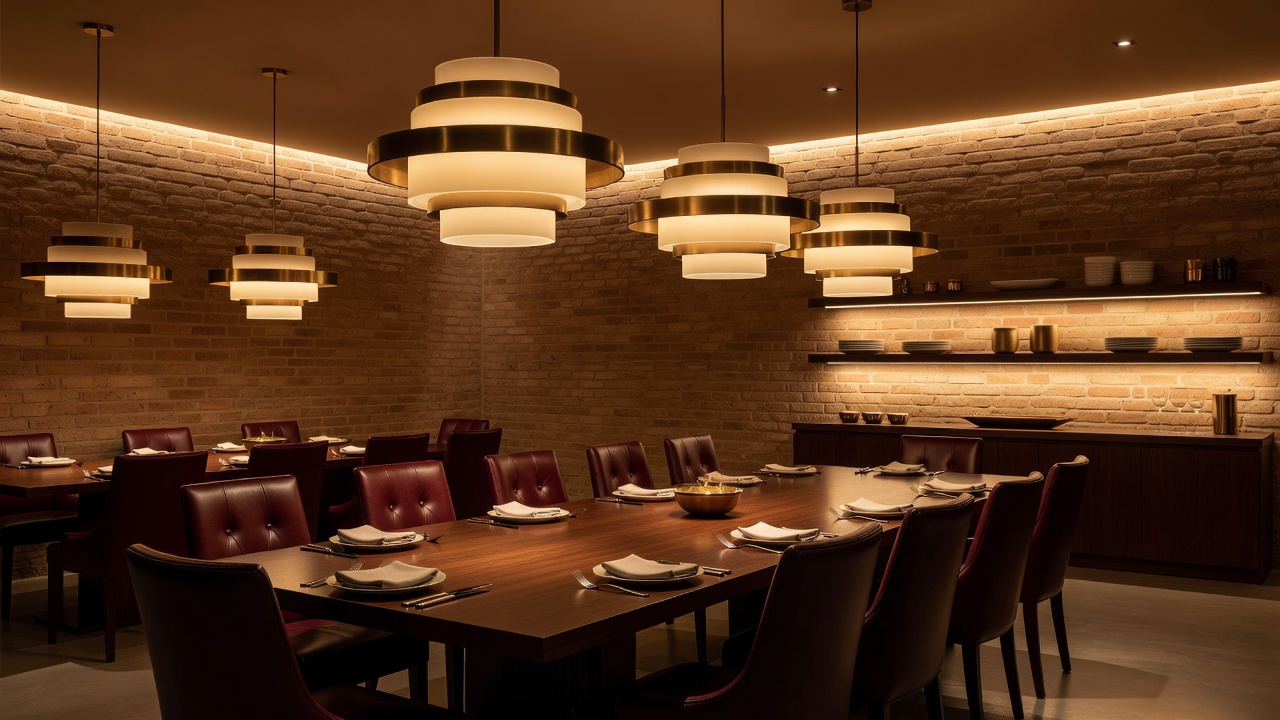
Lighting changes how a guest reads a restaurant. It can make a stone surface appear cool or warm, soften a long room, draw attention to a table, and help staff work comfortably. A dramatic glow is not enough on its own: guests need to see their companions and food, while staff need usable light for service, cleaning, and safe movement. The aim is a balance of visual character and practical clarity.
Designers often organize a scheme into ambient, task, and accent lighting. Ambient light establishes the general brightness and feeling of a room. Task light supports specific activities, from food preparation to reading a menu. Accent light draws attention to an architectural feature, artwork, or material detail. Decorative pendants and wall lights may contribute to more than one layer, but their visual presence should be coordinated with their actual output and position.
Light the table with comfort in mind
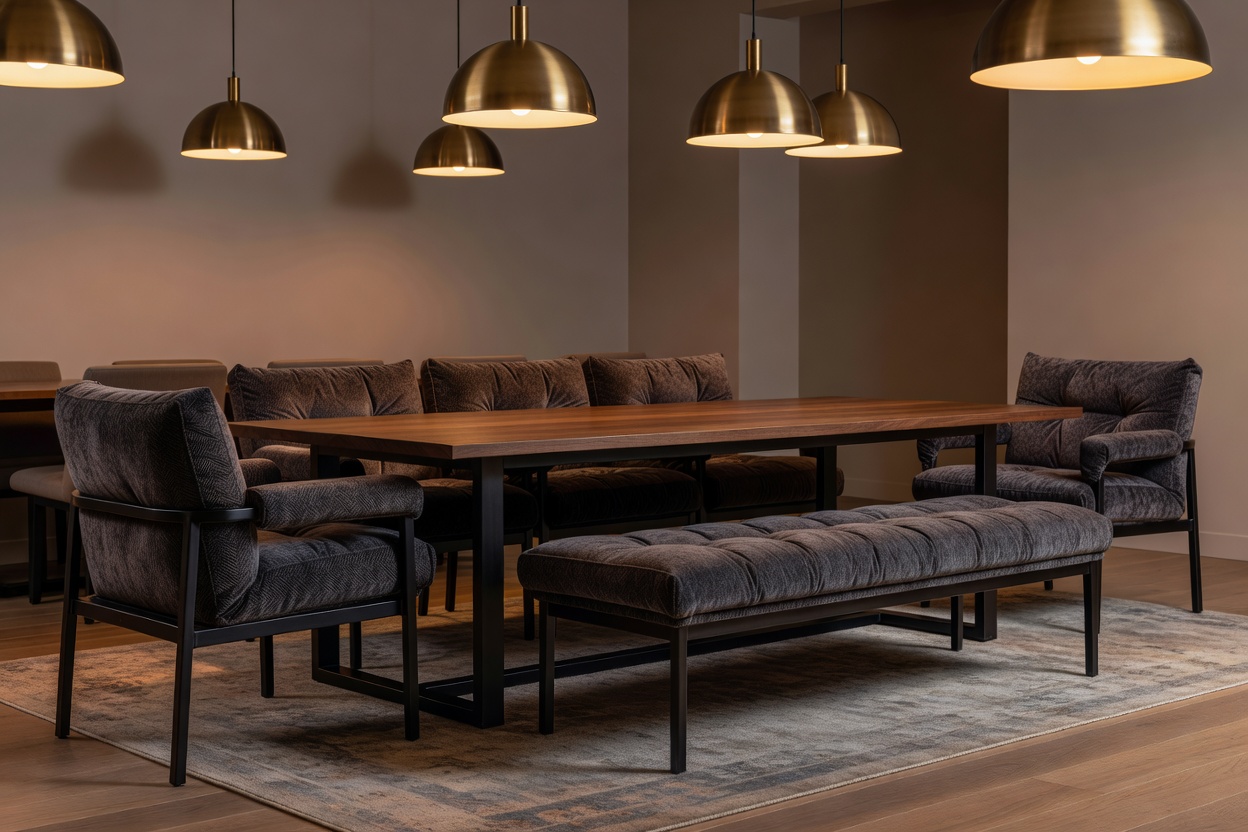
Decorative pendants can establish intimacy and provide a recognizable design rhythm. Their height, scale, and spacing affect how the room feels and whether guests can see one another across a table. A fixture that is beautiful in isolation may create glare when seated, cast a harsh shadow, or obstruct a view through the room. Wall lighting can add a softer perimeter and support a sense of enclosure, while recessed sources can help provide general illumination without adding more objects to the ceiling.
Glare is discomfort caused by excessive brightness or contrast in a person’s field of view. It may come from a visible lamp, a bright reflection on polished stone, a window, or a high-contrast transition between a very dim table and a bright path. A design review should include seated views, not only photographs taken from standing height. Diffusers, shielding, appropriate aiming, and a more matte surface may help, depending on the product and location.
Color, materials, and reflection
Color temperature describes the apparent warm or cool quality of a light source. A warmer tone can make timber and cognac upholstery feel richer, while a cooler source can make pale surfaces appear crisp. The impression depends on the light source, surface colors, surrounding illumination, and the viewer; no single setting guarantees a particular atmosphere. Review samples and fixtures together in the space, ideally during both daylight and evening conditions.
Reflective materials complicate the picture. Polished stone, glass, and metal can bounce bright points toward the eye or create sparkling highlights. A honed surface or a change in fixture position may reduce distracting reflections, though the solution depends on exact geometry. Dark surfaces can absorb more light and make a space feel intimate, but they can also reduce visibility if the scheme is not balanced. Texture adds another variable: grazing light reveals surface relief, while direct light can exaggerate it.
The kitchen has different visual needs
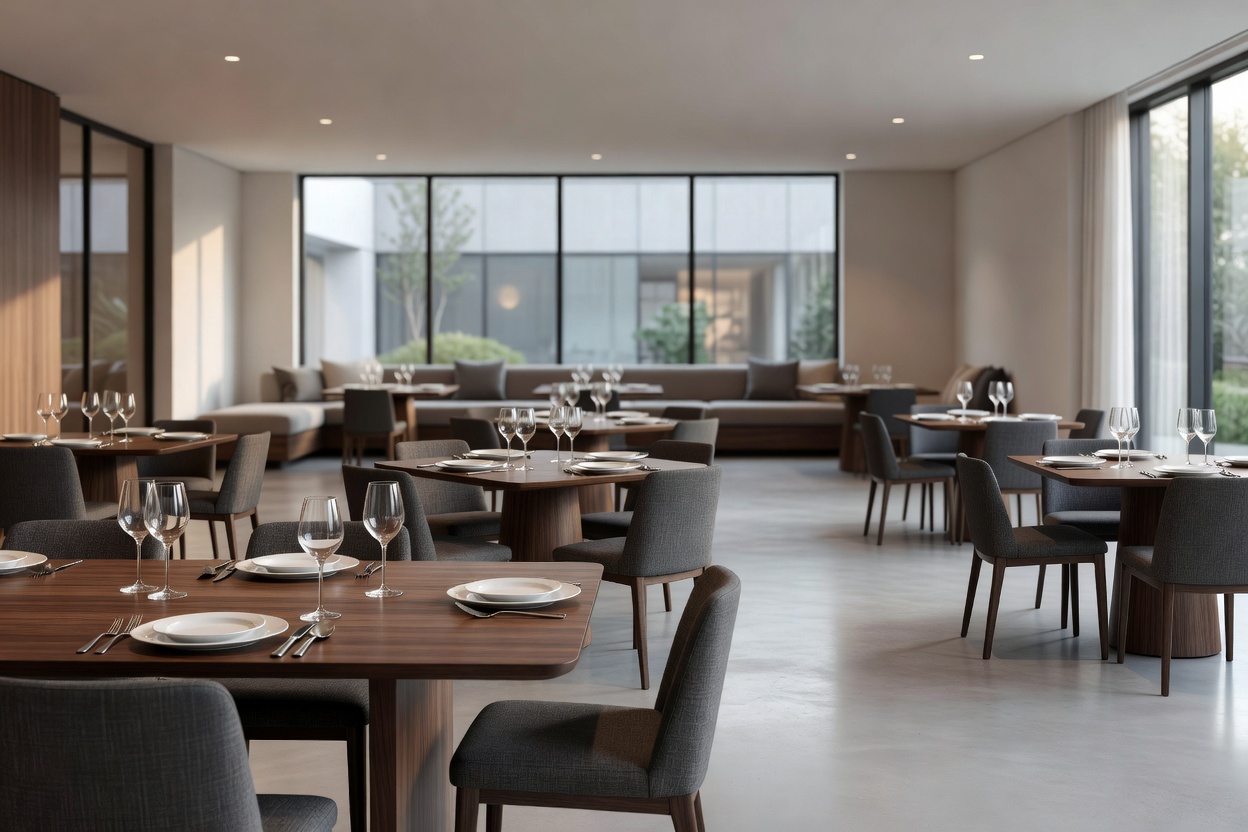
An open kitchen needs light for staff tasks as well as a coherent view from the dining room. Task lighting must support the actual work area; decorative lighting should not make the food-preparation zone harder to use. At the same time, bright work lighting can feel stark when seen from a softly lit dining area. Designers and kitchen specialists can coordinate fixture positions, screening, and control zones so the transition feels considered.
The needs of staff also include service stations, circulation paths, storage, and cleaning. A guest-facing scheme that is too dim may create practical difficulties during service or at the end of the day. Lighting decisions should account for the people working behind the scenes, as well as diners. Exact requirements depend on the tasks, building, equipment, and applicable local rules; qualified project professionals should establish the appropriate solution.
Daylight, evening scenes, and control
Daylight can make a restaurant feel connected to its neighborhood and reveal color accurately. Large windows may provide a lively daytime atmosphere, though direct sun and reflections can disturb guests. Shades, planting, and seating orientation can help manage changing daylight. A room that feels calm at lunch may need a more intimate evening scene without becoming difficult to navigate.
Dimming and scene controls allow a room to change through the day. Separate circuits or zones can support distinct needs: ambient background light, table lighting, wall accents, and brighter service conditions. Controls should be understandable for staff and coordinated with the chosen fixtures and electrical design. The aim is reliable flexibility rather than a complicated system that only one person knows how to operate.
Ultimately, atmosphere is not synonymous with darkness. It emerges from contrast, material, visual comfort, and the way light supports human activity. A successful steakhouse scheme can feel warm and distinctive while allowing guests to see well and staff to work effectively. Review the room from the table, the entrance, the kitchen pass, and the path through the restaurant. Those changing viewpoints will show whether the lighting belongs to the architecture and the hospitality experience.